How-To Decorate When Your Front Door Opens Into Your Living Room
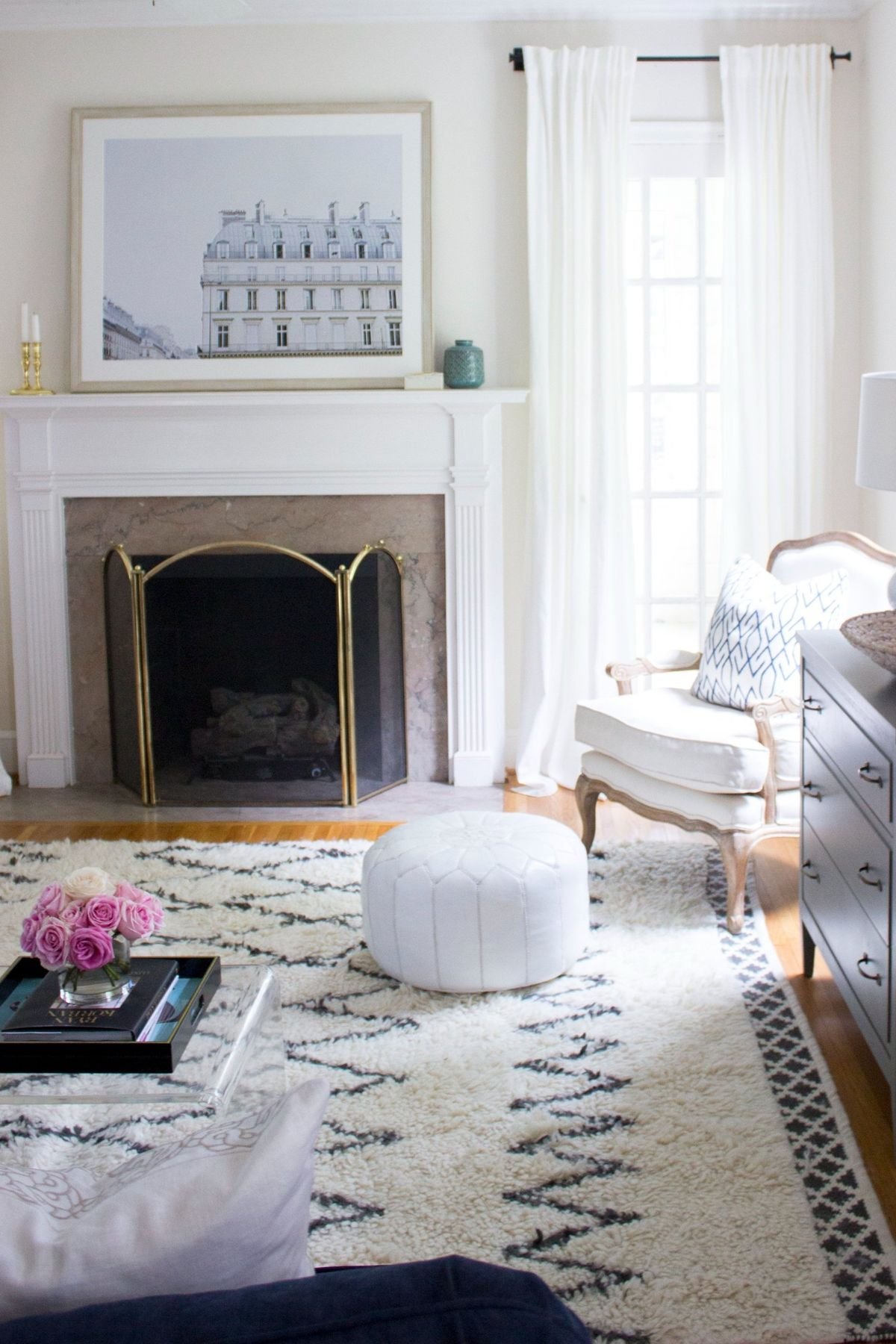
One of the most common layout problems I run into is a front door that opens straight into the living room. No hallway, no landing zone, just the outside world and your sofa in the same three feet. Your living space ends up doing double duty as a hallway and a place to actually sit down.
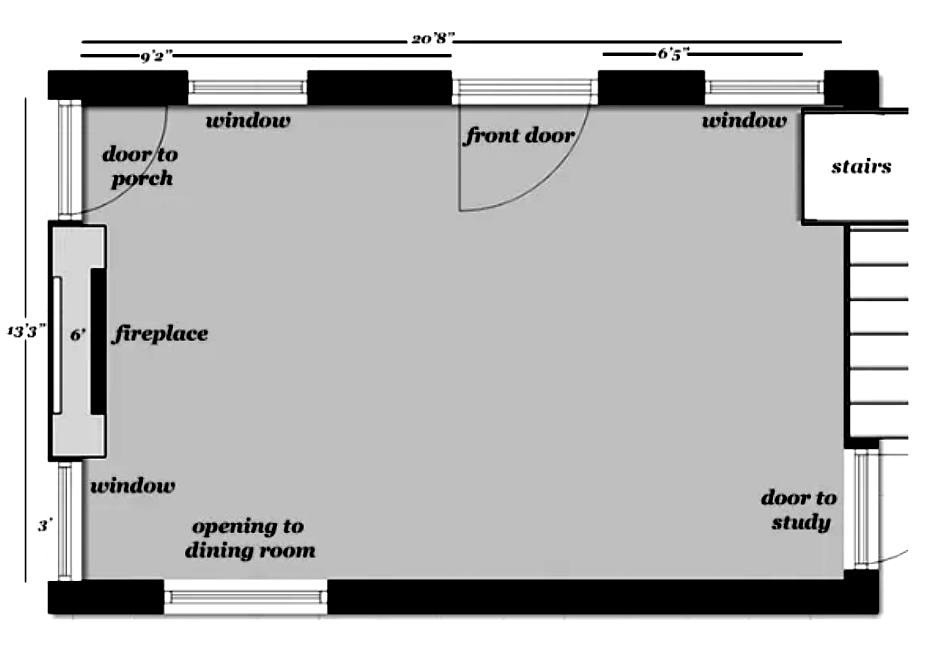
I see this constantly in historic homes, apartments, and modern open-plan layouts. It's solvable with intentional zoning and a little attention to how people actually move through the room. Here are the principles I use, including four layouts I've tested in real projects, and the pieces that made them work in a 1920s Atlanta home where the front door opened right into the living room.
The Problem: Defining an Entry Without a Foyer
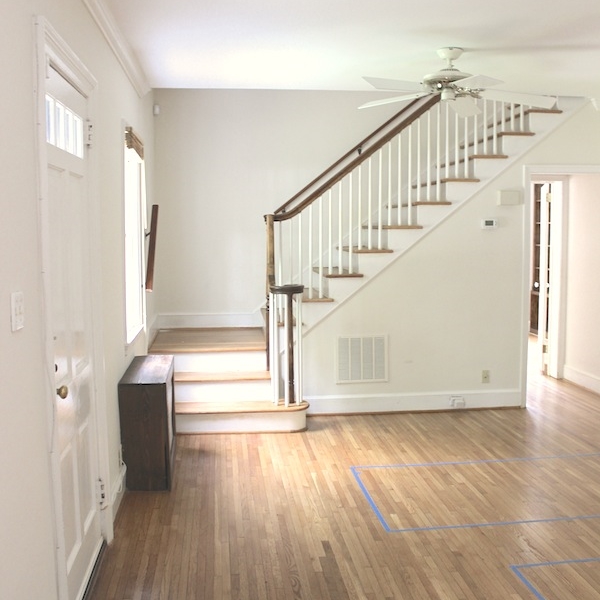
In a project like that Atlanta home, the goal isn't to add more furniture. It's to define zones without walls. A layout that works needs three things:
A drop zone. Somewhere for keys, bags, and the stuff that comes in with you every day.
A clear path of travel. One that doesn't cut straight through your seating area.
Visual separation. Something that signals a shift from outside to inside, even without a door.
Start With Zoning, Not Furniture
In an open layout, zoning does more work than any piece of furniture. A few ways I create that shift without structural changes:
A runner or low-pile rug can "floor" the entry, the same way a foyer tile would. Furniture orientation matters too: the back and height of a sofa can act as a soft wall. And a mirror, a light fixture, or wall-mounted storage placed near the door draws the eye up and marks the space as its own zone, even inside a bigger room.
Four Layouts That Work
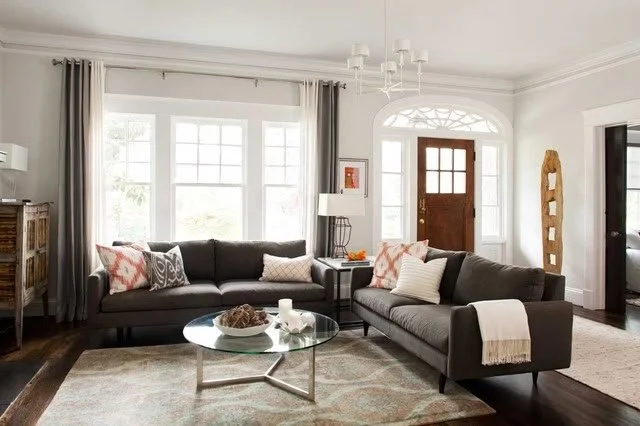
The Perpendicular Sofa. Placing the sofa with its back to the door is the most effective way to carve out a dedicated path. It creates a physical boundary that protects the seating area and gives you a clear walk from the door into the room. This is my go-to when the front door isn't centered on the wall, because it lets you define a real entry and a real seating area instead of blending the two.
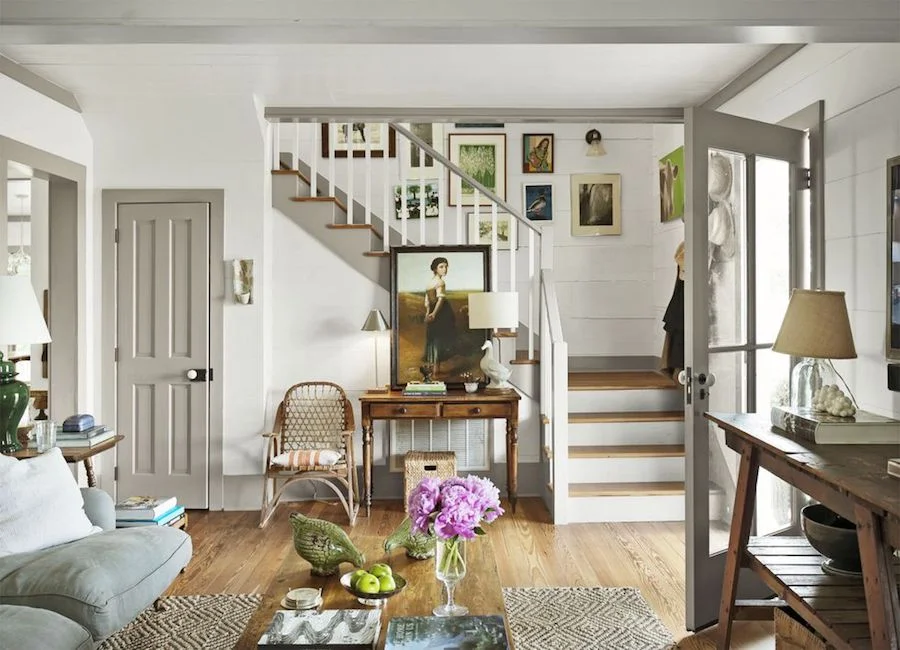
The Wall-Anchored Console. If a floating sofa or a console behind the sofa isn't an option, use the wall next to the door instead. A slim table reads as a foyer the moment you walk in. For something high-end and organic, the Midora Console Table has a honed travertine top and sculptural wood legs, grounded enough to anchor a centered doorway. If you want more of an architectural edge, the Hewitt Console pairs a slender marble surface with a sweeping arched iron base. It reads almost gallery-like right as you walk in.
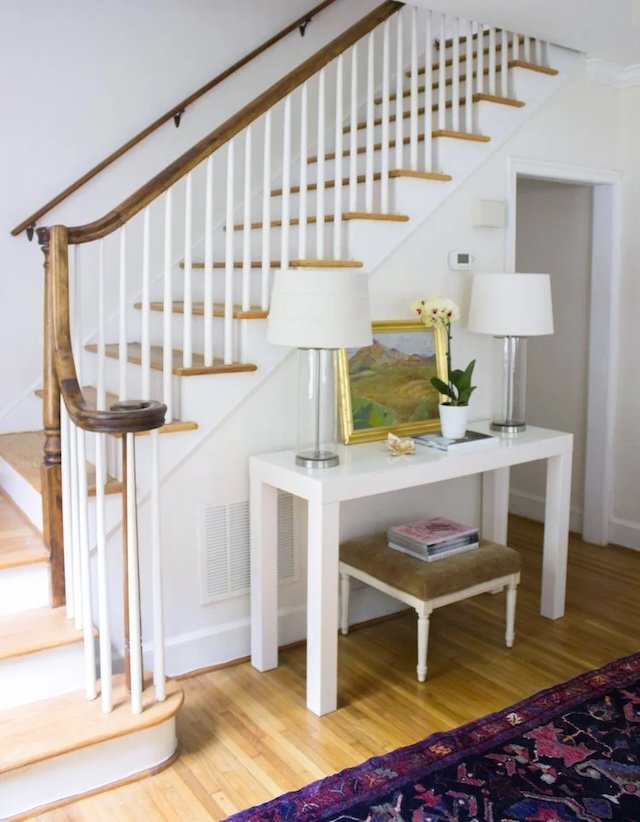
The Runner. A runner is the simplest fix, especially in a tight space. It marks the walk path and gives guests a clear sense of where to go. In high-traffic entries, I stick to low-pile or flat-weave so doors can swing freely. This flat-weave rug and this wool blend runner both hold up well underfoot. For more texture, a jute runner or this patterned jute runner adds a tactile grid pattern that naturally hides dirt.
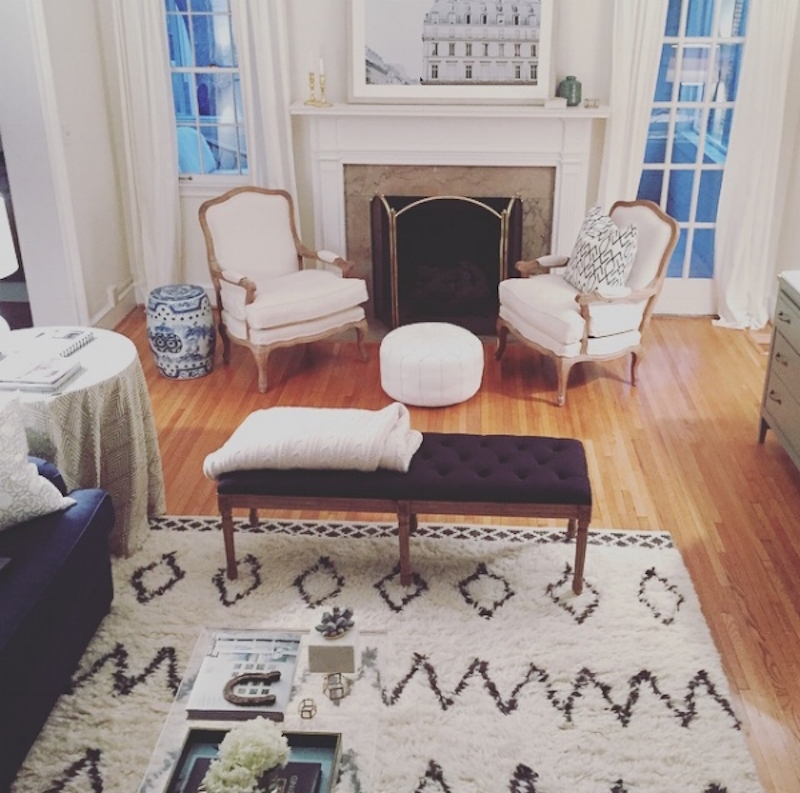
The Sectional Pivot. This is the strongest option when a front door opens into the center of a room. Place the long side of the sectional against the main wall, and the return acts as a quiet gatekeeper between the entry and the seating area. In the Atlanta project, this was the layout that finally worked: putting the sectional on the largest wall let the back of the sofa define the entry without blocking the flow of the room. A sofa paired with a bench can create the same L-shape if you're not working with a true sectional.
Styling the Zone
Once the layout is set, a little styling reinforces it. Start with a catch-all tray or bowl for keys. Add a hook or a small basket for bags. A mirror or a piece of artwork anchors the space visually, and even a small lamp makes the corner feel intentional rather than leftover. You don't need all four. One or two, chosen well, usually does the job.
If your front door opens straight into your living room, the fix isn't to disguise it. It's to design around it with intention: circulation first, then furniture placement, then a few visual cues layered on top. Handled that way, the space can feel welcoming and considered even without a traditional entry.